In the windswept 1840s along the rugged Dorset coast, Mary Anning lives a solitary, austere life that blends relentless fossil hunting with the quiet devotion of caring for her ailing mother. The early mornings find her traversing Lyme Regis’s stony shores, her hands raw from ceaseless searching. Her life is defined by routine and unspoken longing, her scientific brilliance overshadowed by her gender and social standing.
One day, the rhythm of Mary’s life is disrupted by the arrival of Roderick Murchison, a geologist who recognizes her expertise, and his wife Charlotte, who has been sent to recuperate by the sea from a devastating personal loss. Roderick leaves Charlotte in Mary’s care, offering both financial compensation and a profound disturbance of Mary’s carefully contained world
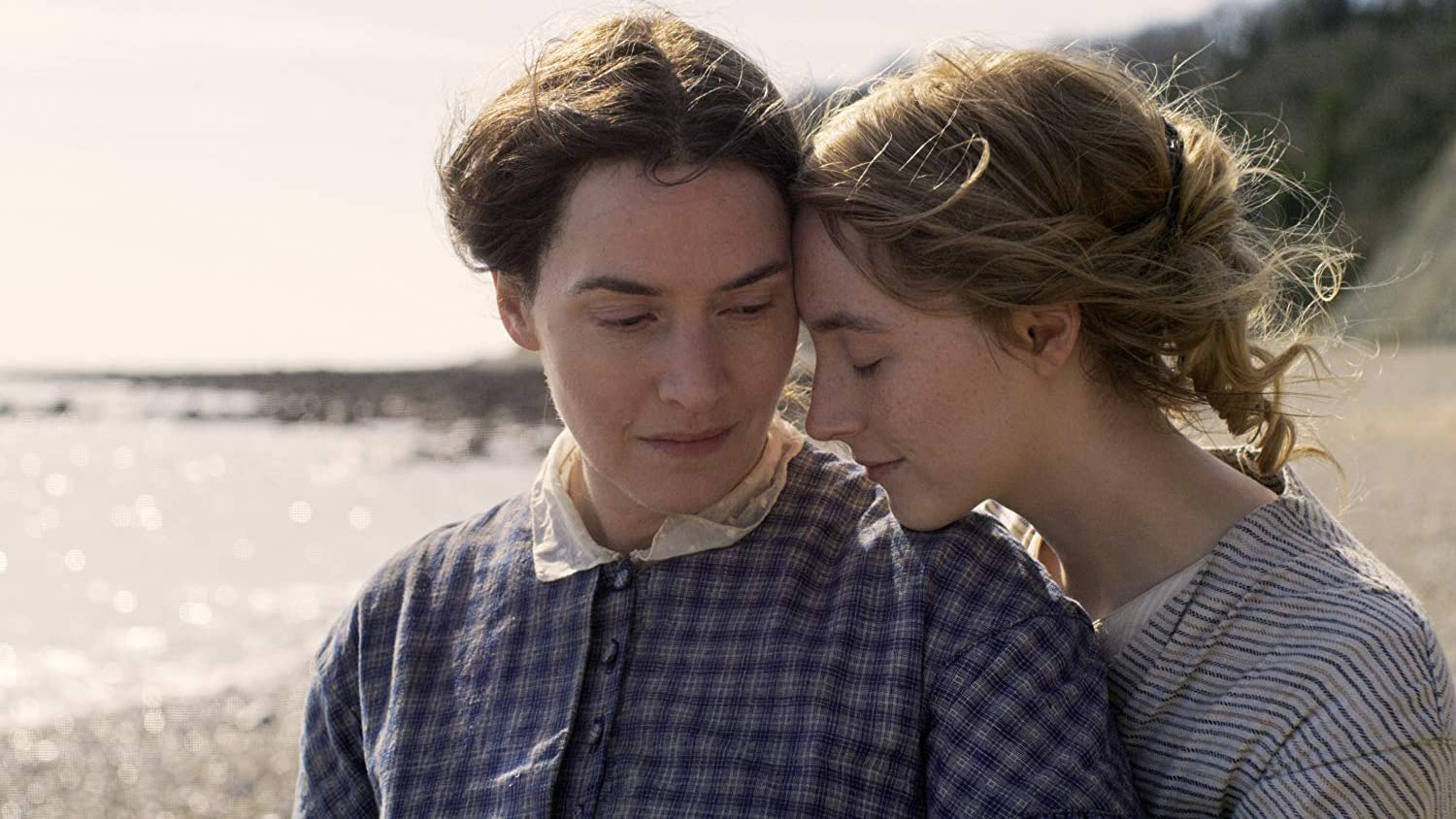
Despite their initial antagonism—fueled by stark differences in class, personality, and life experience—Mary and Charlotte begin a fragile connection grounded in care. Charlotte’s physical and emotional fragility break down Mary’s defenses, and together, they begin to share moments of tenderness and mutual discovery
As Charlotte recovers, their bond deepens from companionship into passionate intimacy. The film presents these moments with raw honesty and reverent restraint, using minimal dialogue and powerful silence to convey unspoken desires—a testament to the performers’ emotional depth and the director’s sensitive touch

Their love, however, defies social conventions and is fleeting. Charlotte eventually returns to her life in London, leaving Mary to confront both abandonment and grief. The death of Mary’s mother only deepens her isolation, yet she receives an unexpected invitation from Charlotte to come to London—a gesture of love and recognition
In the film’s emotionally charged finale, Mary visits the British Museum and sees the ichthyosaur fossil she discovered displayed proudly—yet her name remains uncredited. Charlotte appears beside her, and they silently acknowledge each other across the crowd. It’s a moment heavy with longing, regret, and possibility—a quietly potent symbol of love and erasure
Beyond its central romance, Ammonite serves as a moving exploration of isolation, societal neglect, creativity, and loss. It reimagines the life of a pioneering paleontologist, filling historical gaps with emotional truth and intimate human connection—even when the romance itself is speculative


